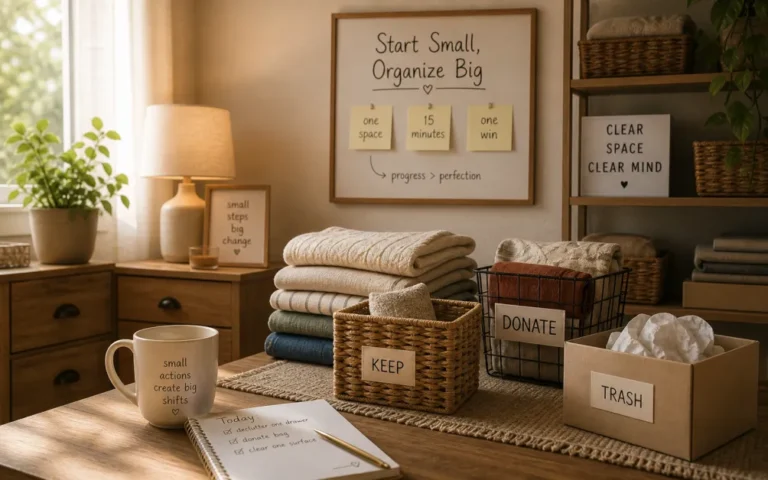
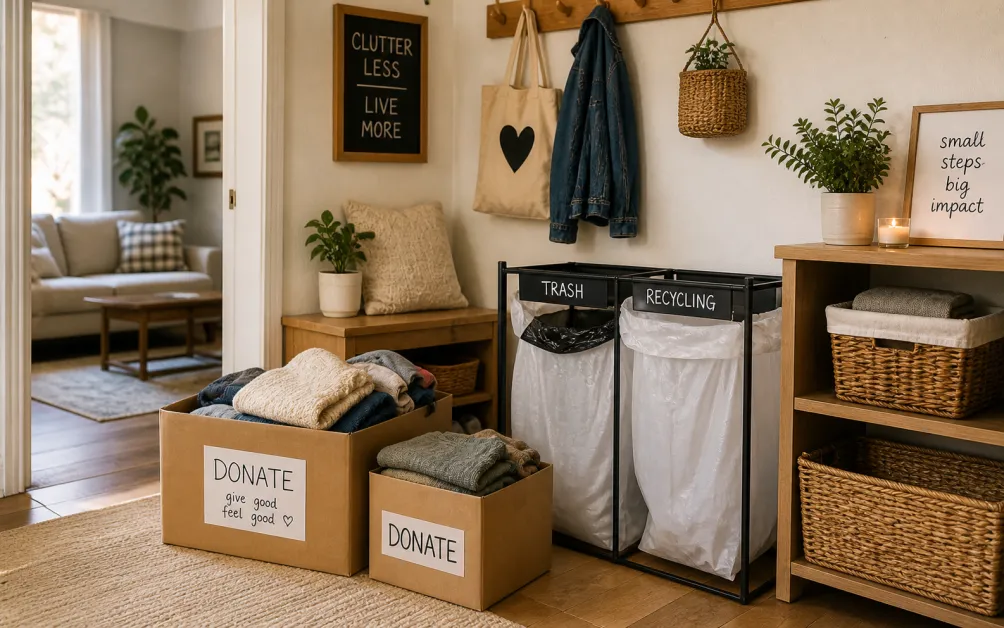
Decluttering your home is one of those projects that sounds simple until you’re standing in your bedroom surrounded by piles of stuff with nowhere to put them. The difference between a decluttering marathon that actually gets done and one that fizzles out halfway through usually comes down to one thing – having the right containers and systems in place before you start.
The right donation boxes and trash bag systems make decluttering faster, more organized, and way less overwhelming. Instead of creating new messes while trying to eliminate old ones, proper sorting containers let you separate items into clear categories, stay motivated, and actually follow through on getting things out of your house.
Why Your Container Choice Actually Matters
Here’s what happens when you skip the planning part – you start pulling items from closets and drawers, and suddenly you’re standing in the middle of three different piles that are bleeding into each other. Clothes end up mixed with books. Donation items get confused with trash. By the time you’re halfway through, you’ve created such a mess that putting everything back feels easier than finishing.
The right system prevents this chaos. When you have dedicated boxes for donations, a clear trash bag setup, and maybe a smaller container for items to sell or give to specific people, your brain knows exactly where each item goes. You move faster, stay focused, and actually complete the project instead of abandoning it halfway through.
Beyond just organization, the physical containers themselves matter too. Flimsy boxes collapse under weight. Thin trash bags split when you’re hauling them out. Containers without handles are awkward to move. These aren’t minor inconveniences – they’re friction points that make you less likely to finish what you started.
Types of Donation Boxes – What Works Best
Sturdy cardboard boxes are the most practical choice for most people. Look for boxes with reinforced bottoms and side handles – they’re easier to seal, stack, and carry to your car. Standard moving boxes (roughly 16x12x12 inches) work well because they’re large enough to hold a decent amount but not so big that they become impossible to lift when full. You can find these at hardware stores, online retailers, or sometimes free from grocery stores and liquor shops.
The advantage of cardboard is that it’s cheap, recyclable, and you can label boxes easily with a marker. The downside is that they eventually fall apart, especially if you’re storing them long-term or if they get wet. If you’re planning to reuse containers for future decluttering projects, skip cardboard.
Plastic storage bins with lids are worth considering if you want something that lasts. Heavy-duty plastic containers with handles hold up through multiple projects and can stack neatly in a garage or basement between uses. They’re more expensive upfront (typically $15-30 per bin), but they pay for themselves if you declutter regularly or have multiple rooms to sort through.
Clear plastic bins have an added advantage – you can see what’s inside without opening them, which helps when you’re deciding whether to donate or keep items later. Opaque bins take up less visual space in your home while you’re working, which some people find less stressful.
Collapsible fabric bins split the difference between cardboard and rigid plastic. They’re lightweight, affordable (around $10-20), and fold flat for storage. They work great if you have limited space and want to avoid the visual chaos of boxes stacked everywhere. The trade-off is that they’re less sturdy than plastic and can tip over if not packed carefully.
Trash Bag Systems That Actually Hold Up
Not all trash bags are created equal, especially when you’re loading them with the weight of actual decluttering – heavy textiles, broken items, and general household refuse. A bag that splits mid-carry means you’re cleaning up a mess instead of moving forward with your project.
Heavy-duty garbage bags (typically 39-45 gallon capacity) are your baseline. Look for bags rated at least 1.5 mil thickness – that’s the measure of plastic durability. Bags thinner than that tear too easily. Brands like Glad ForceFlexor Hefty Premium tend to hold up better than ultra-cheap options, and the extra dollar or two per box is worth not having to double-bag everything.
Consider getting bags in two sizes – larger ones for general trash and smaller kitchen-style bags for lighter items like clothing or soft goods you’re donating. Smaller bags are easier to handle and less likely to burst from overstuffing.
Contractor-grade trash bags are overkill for most home decluttering, but if you’re dealing with construction debris, broken furniture, or a seriously large-scale project, they’re worth it. These 3-4 mil bags cost more but can handle sharp edges and heavy weight without splitting. Home Depot and Lowe’s carry these, usually in bulk packs.
One often-overlooked detail – bag color matters more than you’d think. Black bags hide the contents (good for privacy), but clear or translucent bags let you see what’s inside, which helps prevent accidentally throwing away something you meant to keep. White or colored bags work if you want to visually separate different categories of items.
Building Your Decluttering System
The best setup combines containers of different sizes for different purposes. Start with one large box or bin for donations – items in good condition that you’re confident about giving away. Add a second container for items to sell (if you’re going that route) or give to specific people. Have a trash bag station for actual garbage and broken items.
If you’re tackling a large space like a bedroom or garage, consider adding a “maybe” box for items you’re genuinely uncertain about. This prevents decision paralysis from slowing you down. You can revisit the maybe box after you’ve finished sorting everything else, when you have clearer perspective on what you actually need.
Set up your containers in a central location before you start pulling items. This way you’re not searching for a box halfway through and losing momentum. If you’re working in a small space, use one corner of the room or a hallway as your sorting station.
Practical Setup Tips That Save Time
Label everything clearly – use a permanent marker or printed labels on each box or bag. Write what goes inside (donations, trash, sell) and optionally add the date you started. This prevents confusion later and helps anyone helping you understand the system.
Keep bags and boxes accessible as you work. Don’t stack them in a corner where you have to move other items to reach them. The easier it is to toss something into the right container, the faster you’ll move through your decluttering.
Have a plan for removal before you start. Donation boxes need to go somewhere – research local charities that pick up, schedule a drop-off trip, or arrange for a friend to help you load them. Trash bags need a pickup plan. If you’re waiting around for someone to help you move heavy boxes, you lose momentum. Handle logistics first.
Use bags for lightweight items and boxes for heavier things. Bags conform to odd shapes and are easier to carry when full, while boxes protect fragile items and stack neatly. Mix and match based on what you’re actually sorting through.
FAQ – Common Decluttering Container Questions
How many boxes do I actually need?
Start with at least three – one for donations, one for trash, and one for items you’re unsure about. For a full bedroom or living room, five to seven containers gives you more flexibility. You can always grab extras if you run out, but having too many containers creates clutter before you’ve even started.
Should I use bags or boxes for donations?
Boxes are better for donations because they protect items, stack neatly in a car, and look more organized when you’re dropping them off. Bags work if you’re donating soft goods like clothing and textiles, but they’re harder to stack and items can shift around during transport.
What’s the best trash bag size for decluttering?
39-gallon bags are the sweet spot – large enough to hold a decent amount but not so massive that they become impossible to lift or fit in a car. If you’re dealing with mostly lightweight items like clothing, 30-gallon bags work fine and are easier to handle.
Can I reuse boxes from online orders?
Yes, if they’re in good condition. Check that the bottom isn’t damaged and reinforce it with packing tape if needed. Boxes that originally held heavy items are more durable than those that held lightweight stuff. Just make sure they’re clean and dry before using them.
How do I keep bags from tearing during transport?
Double-bag heavy items, don’t overstuff individual bags, and place them in a sturdy container (like a laundry basket or plastic bin) for transport. This prevents bags from shifting and tearing against sharp edges in your car. It takes an extra minute but saves the mess of cleanup.
Final Thoughts
Decluttering isn’t really about the boxes and bags – it’s about removing friction so you can actually finish what you start. The right containers keep you organized, motivated, and moving forward. Pick sturdy boxes or bins, get heavy-duty trash bags, label everything clearly, and set up your system before you begin. That’s the difference between a decluttering project that transforms your space and one that just creates a bigger mess.