How Much Should You Really Spend on Outdoor Kitchen Cabinets?
Outdoor kitchen cabinets are one of those purchases where price tags can swing wildly – from a few hundred dollars to several thousand. The gap between budget options and premium brands isn’t just about materials; it’s about how long your cabinets survive weather, how they look after a few seasons, and whether you’re replacing them in five years or fifteen.
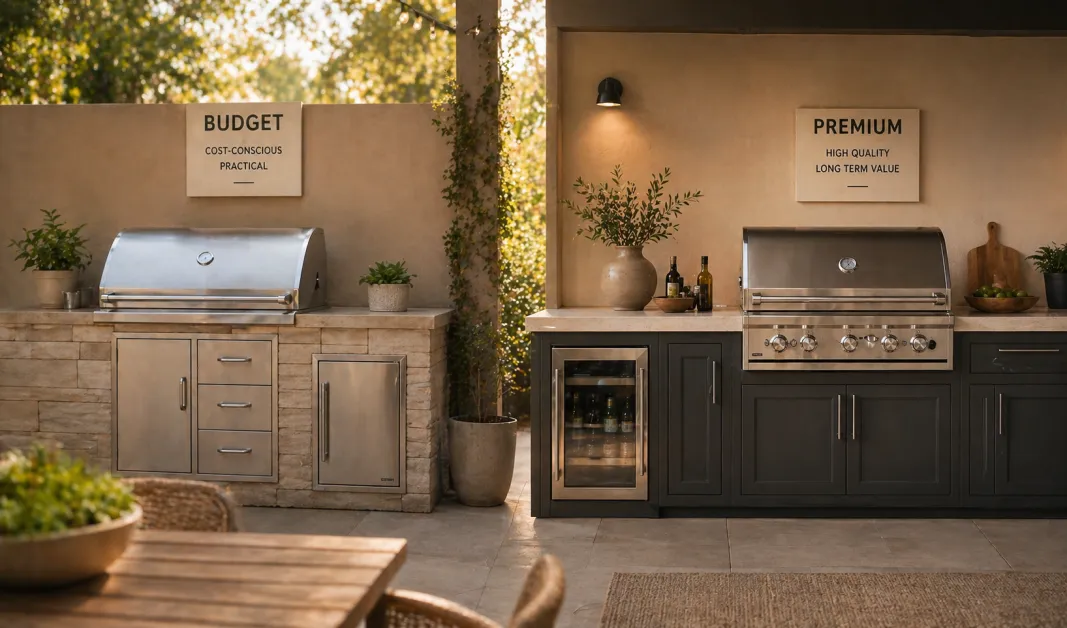
Budget outdoor kitchen cabinets typically cost $300-$800 per linear foot, while premium brands run $1,500-$3,500+ per linear foot. The difference comes down to materials, weather resistance, construction quality, and warranty coverage. Budget options work fine for mild climates or temporary setups, but premium cabinets hold up better to freeze-thaw cycles, salt air, and intense sun exposure.
The Budget Cabinet Reality – What You’re Getting
Budget outdoor kitchen cabinets usually come in two flavors: basic stainless steel or composite materials that mimic wood. They’re designed to be functional and affordable, which means corners get cut somewhere.
Most budget options use 304-grade stainless steel (not marine-grade 316), which corrodes faster in coastal or humid climates. The cabinet frames are often thinner gauge metal, and hinges tend to be standard hardware rather than heavy-duty marine-grade. Doors might warp or rust at the seams after a couple of seasons in harsh weather.
Composite or faux-wood budget cabinets look decent initially but don’t hold up well. They’re typically made from particleboard or MDF with a vinyl or laminate veneer. Water penetration causes swelling and delamination. These cabinets usually come with a 1-2 year warranty, if any at all.
Where budget cabinets shine: if you live in a dry climate (Arizona, parts of California), don’t cook outdoors constantly, or you’re setting up a seasonal kitchen you’ll tear down in winter. For renters or temporary outdoor spaces, budget makes sense financially.
Premium Brands – The Investment Case
Premium outdoor kitchen cabinet manufacturers use marine-grade 316 stainless steel, which resists corrosion far better than 304. They reinforce corners, use commercial-grade hinges and fasteners, and pay attention to drainage and ventilation to prevent moisture buildup inside the cabinet.
High-end brands like Lynx, DCS, and Alfresco engineer cabinets specifically for outdoor conditions. They use thicker gauge steel, seal all seams properly, and design doors to shed water rather than trap it. Cabinet interiors often have ventilation to prevent condensation.
Premium cabinets also come with better warranties – typically 5-10 years, sometimes longer. That coverage matters because if something fails, you’re not replacing the entire unit yourself.
The aesthetic difference is real too. Premium cabinets have cleaner lines, better hardware finishes, and more color options. They integrate seamlessly with built-in grills and cooktops rather than looking like an afterthought.
Mid-Range Options – The Sweet Spot for Most People
Between rock-bottom budget and luxury premium sits a middle tier ($800-$1,500 per linear foot) that often makes the most sense. Brands like Summerset, Cal Flame, and Blaze offer solid construction without the premium price tag.
Mid-range cabinets typically use 304 stainless steel (acceptable for most climates), commercial-grade hinges, and better-sealed construction than budget options. They’re designed to last 7-10 years with proper maintenance. Warranties usually run 3-5 years.
You’re paying for durability and decent looks without the ultra-premium engineering or finishes. For most homeowners in moderate climates who use their outdoor kitchen regularly, this tier delivers the best value.
What Actually Matters When Comparing Costs
Material grade is the biggest cost driver. Marine-grade 316 stainless costs significantly more than 304 grade, and it’s worth it if you’re near salt water or in a humid climate. Inland, dry climates can get away with 304.
Gauge thickness affects longevity. Thicker steel (16-gauge or lower number) resists denting and warping better than thin 20-gauge material. Thinner cabinets are cheaper but feel flimsy and dent easily.
Sealing and ventilation prevent moisture damage. Budget cabinets often skimp here, leading to rust from the inside out. Premium cabinets have sealed seams and drainage holes.
Hardware quality matters more than people think. Cheap hinges seize up, handles corrode, and latches fail. Premium hinges cost more but last years longer.
Warranty coverage is your safety net. A 1-year warranty on a $5,000 cabinet investment is sketchy. Look for at least 3-5 years, and read what’s actually covered.
Climate and Your Cabinet Choice
Where you live dramatically affects which tier makes sense. In Arizona or Southern California, budget cabinets might last 5-7 years. In Minnesota, the Midwest, or coastal areas, they’ll fail much faster due to freeze-thaw cycles and humidity.
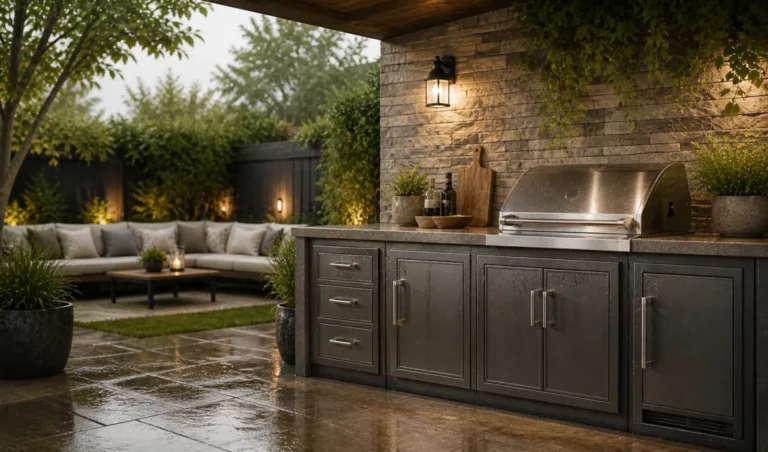
Freeze-thaw cycles are brutal on cheap cabinets. Water gets into seams, freezes, expands, and cracks the material. This happens repeatedly through winter, degrading the cabinet structure. Premium cabinets handle this better because seams are sealed tighter and materials are more forgiving.
Salt air corrodes metal aggressively. If you’re within a few miles of the ocean, skip budget stainless and go mid-range or premium with 316-grade steel. The extra cost pays for itself in longevity.
Real-World Durability Expectations
Budget cabinets – 3-5 years before noticeable rust, corrosion, or material failure. Hinges may seize. Doors might warp.
Mid-range cabinets – 7-10 years with regular maintenance. Most components stay functional. Some cosmetic wear is normal.
Premium cabinets – 15+ years. These are built to last through multiple seasons of heavy use. Maintenance extends their life further.
These timelines assume basic maintenance – wiping down surfaces after use, leaving doors open to dry, cleaning out debris. Neglect shortens any cabinet’s lifespan significantly.
Hidden Costs Beyond the Sticker Price
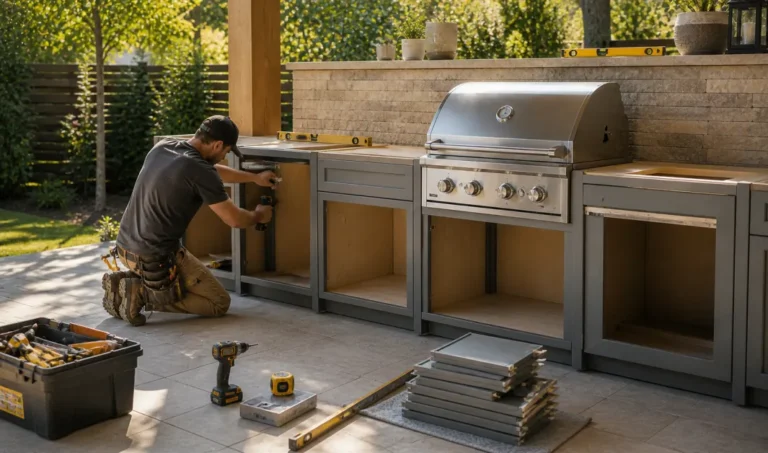
Installation labor often costs as much as the cabinets themselves, especially if your outdoor kitchen needs custom fitting or electrical/plumbing work. Budget cabinets don’t save money here – installation is the same either way.
Maintenance supplies add up. Stainless steel cleaner, protective sealants, and occasional repairs aren’t expensive individually but accumulate over years. Premium cabinets need less frequent maintenance.
Replacement parts are cheaper for popular mid-range and premium brands. Budget brands sometimes disappear from the market, making repairs impossible. If a hinge fails on a Lynx cabinet, you can order a replacement. For a no-name budget brand, you might be out of luck.
FAQ | Outdoor Kitchen Cabinet Costs
Are budget stainless steel cabinets worth it?
It depends on your climate and usage. In dry climates with light use, yes – they’ll last several years. In humid or coastal areas, or if you cook outdoors frequently, the money you save upfront gets eaten by premature replacement. Mid-range is usually the smarter choice.
What’s the difference between 304 and 316 stainless steel?
316-grade stainless contains molybdenum, which makes it more corrosion-resistant, especially to salt and chlorides. 304 is fine for most inland areas but fails faster near the ocean or in very humid climates. If you’re close to salt water, 316 is worth the extra cost.
How long do outdoor kitchen cabinets typically last?
Budget cabinets: 3-5 years. Mid-range: 7-10 years. Premium: 15+ years. These assume average use and basic maintenance. Extreme weather or neglect shortens these timelines.
Is warranty coverage important for outdoor cabinets?
Absolutely. A short warranty (1-2 years) on an outdoor product is a red flag – manufacturers know these cabinets won’t hold up. Look for at least 3-5 years. Premium brands often offer longer coverage because they’re confident in durability.
Can I save money by going budget now and upgrading later?
Usually not. Budget cabinets don’t hold resale value, and you’ll spend money on repairs before replacement. If budget is tight now, mid-range is a better compromise than replacing cabinets twice.
Wrapping Up
If you’re building a permanent outdoor kitchen and live anywhere with humidity, freeze-thaw cycles, or salt air, mid-range to premium cabinets are worth the investment. They’ll outlast budget options by years and cost less per year of use. For dry climates or temporary setups, budget can work – just go in with realistic expectations about durability.
The real question isn’t “how cheap can I go?” but “how long do I want these cabinets to last?” That answer determines whether you’re looking at budget, mid-range, or premium pricing.