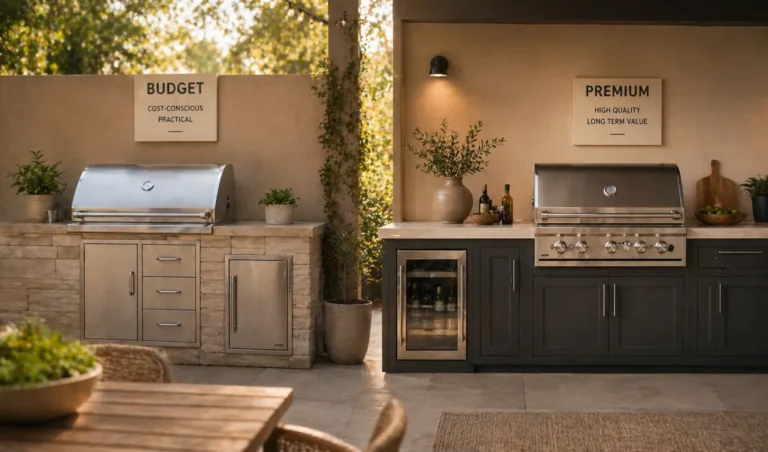
The short answer: Modular outdoor cabinets offer flexibility and easier installation,hile built-in options provide a seamless, custom look and better weather protection. Your choice depends on your budget, permanence plans, and how much customization you want.
If you’re planning an outdoor kitchen or patio refresh, the cabinet question comes up fast. Do you go with modular units you can arrange and rearrange, or invest in built-in cabinetry that’s purpose-built for your space? It’s not a trivial decision – outdoor cabinets take a beating from sun, moisture, and temperature swings, and the wrong choice can mean replacing them in a few years instead of a decade.
Let’s break down what actually matters when you’re deciding between these two approaches.
What Are Modular Outdoor Cabinets?
Modular outdoor cabinets are freestanding or semi-assembled units designed to work independently or connect together. Think of them like building blocks – you buy individual pieces (base cabinets, wall units, corner pieces) and arrange them how you want. They typically come pre-finished and ready to place, with minimal on-site assembly required.
Common materials include stainless steel, powder-coated aluminum, and marine-grade composite materials. Most are designed to sit on a patio or deck without permanent installation, though some models can be anchored down.
What Are Built-In Outdoor Cabinets?
Built-in outdoor cabinets are custom or semi-custom units installed directly into your outdoor space, often integrated with countertops, appliances, and structural elements like pergolas or stone walls. They’re typically constructed on-site or delivered in larger sections and secured permanently.
Built-ins are framed, finished, and sealed as a single system, which means better protection from weather and a more polished, integrated aesthetic. They’re often part of a larger outdoor kitchen design rather than standalone pieces.
Modular Cabinets – Advantages
Flexibility and rearrangement is the biggest draw. If you move, redesign your patio, or realize you need storage in a different spot, modular units move with you. No demolition, no regret.
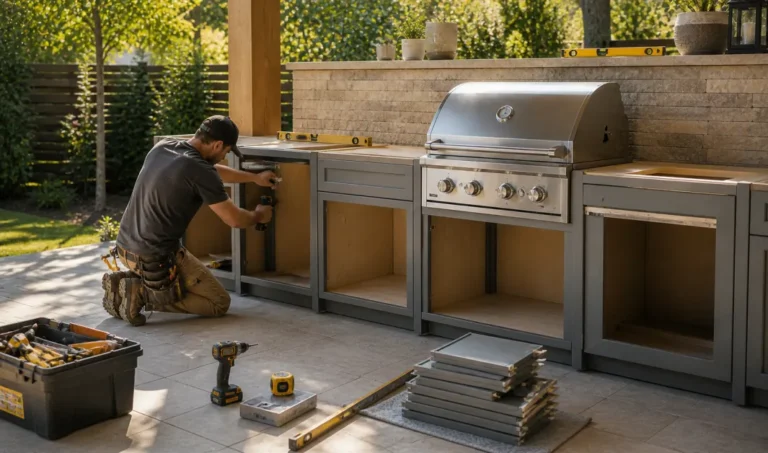
Installation is straightforward – most modular systems require minimal tools and can be set up in a day or two. You don’t need a contractor or specialized labor, which saves money upfront. Many homeowners handle assembly themselves, though hiring help is always an option.
Cost is typically lower than built-in alternatives, especially for smaller setups. A quality modular unit runs less than custom cabinetry because manufacturing is standardized. If budget is tight, modular gives you outdoor storage without the five-figure investment.
Replacement is easier too. If a single modular cabinet gets damaged or you want to upgrade one piece, you swap just that unit instead of tearing out an entire built-in system. This matters more than you’d think when dealing with outdoor weather exposure.
Modular Cabinets – Drawbacks
Weather sealing is the weak point. Modular units have more seams and joints where water can sneak in, especially where pieces connect. You’ll need to maintain caulk and seals more frequently, and gaps between units can trap moisture and debris.
They look less integrated. Even high-quality modular cabinets read as “separate pieces” rather than part of your outdoor design. If you’re going for a cohesive, custom aesthetic, modulars can feel disjointed, especially if you’re mixing sizes or styles.
Limited customization means you’re working with standard dimensions and layouts. If your space has odd angles, slopes, or specific appliance requirements, modular systems might not fit perfectly. You’ll end up with awkward gaps or unused space.
Durability varies widely. Cheaper modular units can start looking weathered after 3-5 years. Higher-end options last longer, but you’re paying closer to built-in prices at that point.
Built-In Cabinets – Advantages
Custom fit is huge. Built-ins are measured and constructed for your exact space, which means no wasted gaps, perfect angles, and seamless integration with your patio layout. They work around existing features instead of forcing you to work around them.
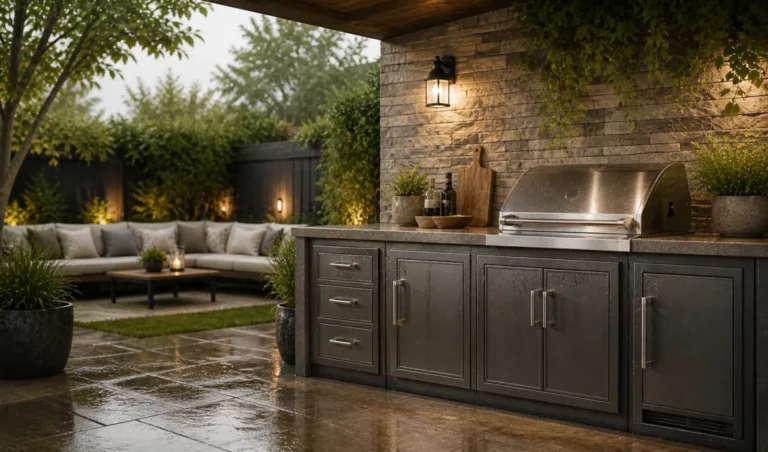
Weather protection is superior. Built-in systems are sealed as one cohesive unit with fewer joints and better drainage. Water runs off rather than pooling in seams, which extends the life of the cabinets and the items inside.
Aesthetic integration makes your outdoor space feel intentional and finished. Built-ins look like they belong in your patio design, not like furniture you placed there. This matters if you care about curb appeal or resale value.
Longevity is better when done right. Quality built-in outdoor cabinetry can last 15-20 years with proper maintenance, compared to 5-10 years for many modular options. You’re making a long-term investment that pays off.
Built-In Cabinets – Drawbacks
Cost is significant. Built-in outdoor cabinetry starts around $3,000-5,000 for a small setup and easily climbs to $10,000-20,000+ for a full outdoor kitchen. You’re paying for custom design, professional installation, and materials built to last.
Installation requires professionals. This isn’t a weekend DIY project – you need contractors, possibly electricians or plumbers, and time for proper construction and sealing. Labor adds up fast.
You’re committed. If you move or want to redesign, built-in cabinets stay behind. They can’t be relocated or repurposed easily. This is fine if you plan to stay put, but it’s a significant limitation if you rent or move frequently.
Repair and replacement are complicated. If a section gets damaged, you might need to replace a larger portion of the system rather than swapping one unit. This gets expensive and time-consuming.
Modular vs. Built-In | Quick Comparison
| Factor | Modular | Built-In |
|---|---|---|
| Initial Cost | $500-3,000 | $3,000-20,000+ |
| Installation | DIY or simple professional | Professional required |
| Customization | Limited to standard sizes | Fully custom to your space |
| Weather Protection | Good with maintenance | Excellent |
| Lifespan | 5-10 years | 15-20 years |
| Portability | Can move or relocate | Permanent installation |
| Aesthetic | Furniture-like appearance | Integrated design |
How to Decide | Questions to Ask Yourself
- Are you staying long-term? If you plan to stay in your home for 10+ years, built-in cabinets make sense financially. If you might move or redesign in 5 years, modular is smarter.
- What’s your budget? Be honest about what you can spend. Quality modular units are still a solid investment under $3,000. If you have $5,000+, built-ins become more competitive.
- How much customization do you need? If your patio has standard dimensions and you’re okay with a furniture-style look, modular works. If you want everything to fit perfectly and integrate with existing features, built-in is worth the investment.
- How much maintenance are you willing to do? Modular units need more regular sealing and caulking. Built-ins need less frequent attention but require professional repairs. Pick what fits your lifestyle.
- What’s your design priority? Modular cabinets prioritize flexibility. Built-ins prioritize aesthetics and durability. Neither is wrong – it depends on what matters more to you.
The Hybrid Approach
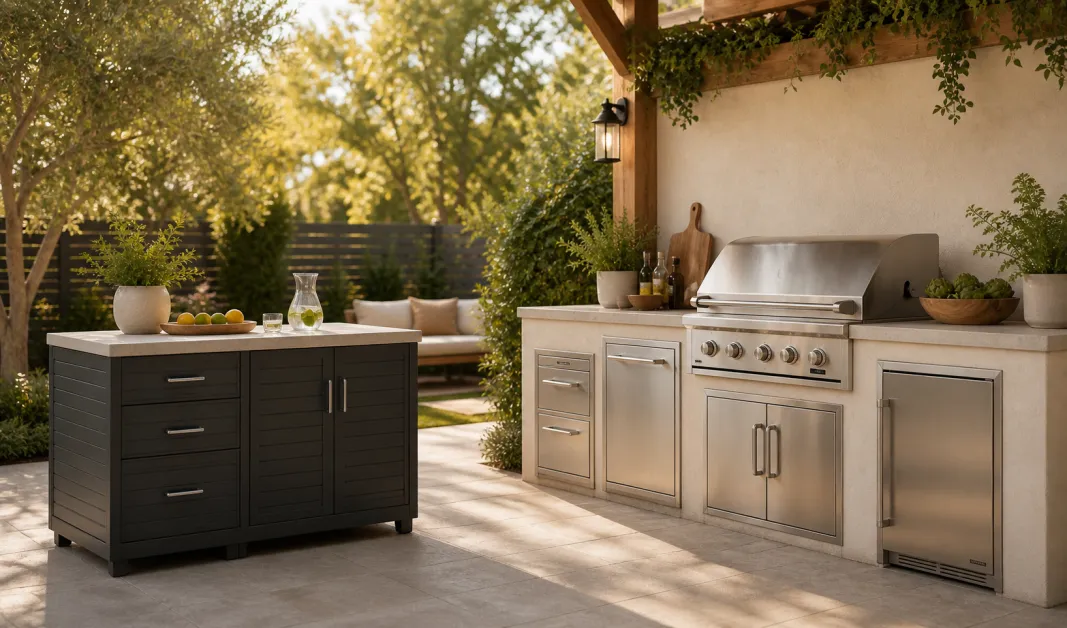
Some homeowners split the difference: they use modular base cabinets for storage and flexibility, then add a permanent countertop and built-in grill or mini fridge on top. This gives you the cost savings and flexibility of modular with some of the integrated look of built-in.
It’s a practical middle ground if you want a more finished outdoor kitchen without the full custom price tag.
Frequently Asked Questions
How long do outdoor cabinets actually last?
Quality modular cabinets last 5-10 years with regular maintenance. Built-in systems built with marine-grade materials can last 15-20 years. Much depends on climate – coastal or very humid areas stress cabinets faster than drier regions.
Can I convert modular cabinets to built-in later?
Technically, you could anchor modular units down and integrate them, but it’s awkward. They’re not designed for permanent installation, so sealing and anchoring won’t be as effective as purpose-built systems. Better to plan ahead.
Do I need a permit for outdoor cabinets?
Modular units usually don’t require permits since they’re freestanding. Built-in cabinets might, depending on your local codes and whether they’re connected to utilities. Check with your city or county before starting any built-in project.
What materials hold up best outdoors?
Stainless steel and powder-coated aluminum are solid for modular options. For built-ins, look for marine-grade plywood or composite materials, stainless steel hardware, and proper weatherproofing. Avoid standard wood – it doesn’t last outdoors without constant maintenance.
Can I put a modular cabinet under a covered patio?
Yes, and it actually extends the lifespan since they’re not exposed to direct sun and rain. Even under cover, use modular units rated for outdoor use – regular furniture-grade cabinets will still deteriorate from humidity and temperature swings.
The Bottom Line
Choose modular if you want flexibility, lower upfront cost, and easier installation. Choose built-in if you’re staying put, want a custom fit, and value durability and aesthetics. Neither choice is wrong – it’s about matching the cabinet type to your actual situation and priorities. Think about your timeline, budget, and how much your outdoor space matters to your home’s overall appeal, then decide from there.