La Marzocco Linea Classic vs. Linea Micra | Which Home Espresso Machine Actually Fits Your Kitchen?
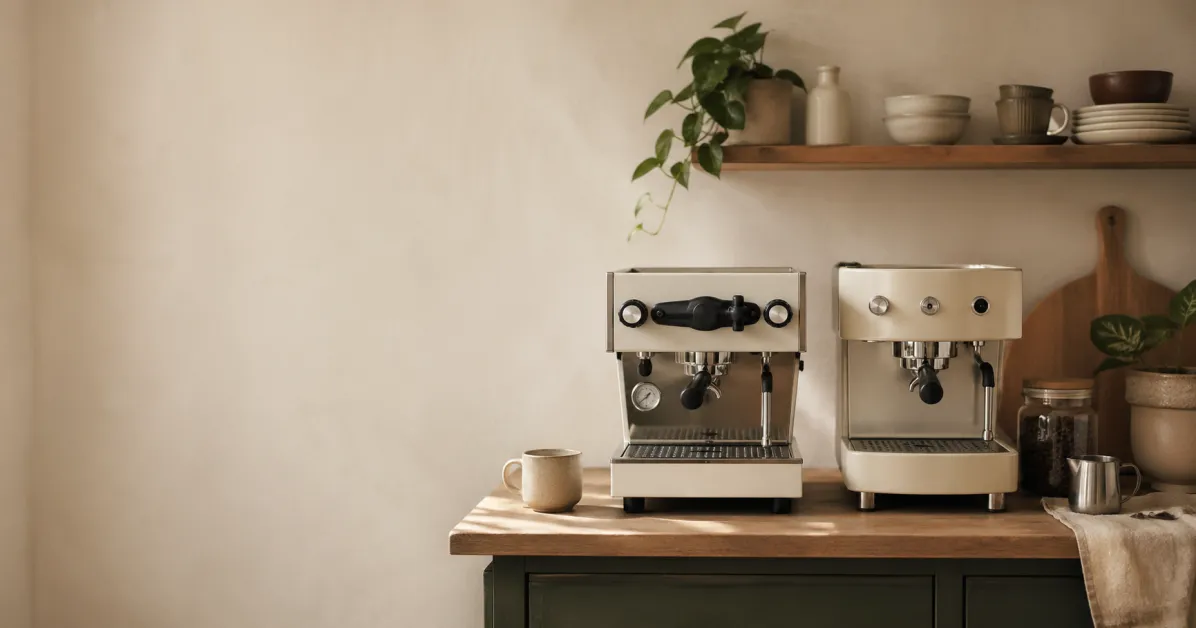
If you’re serious about espresso at home, La Marzocco’s Linea Classic and Linea Micra are the two machines that keep coming up in conversations. The Classic is the bigger, more traditional option with serious thermal stability. The Micra is the newer, compact alternative that promises professional results in a smaller footprint. The real question: which one actually makes sense for your kitchen and your coffee habits?
What You’re Actually Choosing Between
La Marzocco built its reputation on commercial espresso machines, so when they released home versions, people paid attention. The Linea Classic arrived first and became the gold standard for serious home baristas. It’s a full-sized machine with a heat exchanger design that keeps water at the right temperature for both espresso and steam.
The Linea Micra came later as a response to a real problem: the Classic takes up serious counter space. The Micra keeps the essential engineering but shrinks the footprint by about 30%. It’s still a heat exchanger machine, still built with La Marzocco’s attention to detail, but designed for kitchens that can’t accommodate a 24-pound beast.
Both machines sit in the premium home espresso category, meaning they’re not impulse buys. But if you’re already thinking about spending $4,000-plus on espresso, understanding the difference between these two matters.
Size and Counter Space – The Obvious Difference
The Classic measures roughly 21 inches wide, 17 inches deep, and 13 inches tall. It’s a statement piece on your counter – the kind of thing that says you take coffee seriously. If you have a dedicated coffee bar or a large kitchen island, the Classic fits naturally. If your counter space is limited or you’re in an apartment, it’s a real commitment.
The Micra is noticeably more compact at about 17 inches wide and 13 inches deep. That might not sound like much, but it’s the difference between “this dominates my kitchen” and “this fits reasonably on my counter.” The Micra works in smaller kitchens, on bar carts, or in coffee nooks without overwhelming the space.
Height-wise, they’re similar, so shelf clearance isn’t really a deciding factor. The real question is how much horizontal counter real estate you can spare for an espresso machine you’ll use daily.
Water Tank Capacity and Refilling
The Classic holds about 2.5 liters of water in its internal tank. That’s enough for multiple espresso shots and steaming milk without refilling constantly. For someone pulling 4-5 drinks in the morning, you might refill once, maybe twice.
The Micra’s tank is smaller – around 1 liter. You’ll refill more often, especially if you’re making lattes or cappuccinos that require more steam. If you’re a single-espresso-shot-and-go person, it’s fine. If you’re pulling drinks for a household, you’ll notice the difference.
This isn’t a dealbreaker, but it’s worth factoring into your routine. Some people prefer the smaller tank because it forces fresher water more frequently. Others find constant refilling annoying.
Heat Exchanger Performance – Where They’re Actually Similar
Both machines use heat exchanger technology, which is the same approach La Marzocco uses in their commercial equipment. This design lets you pull espresso and steam milk simultaneously without waiting for the machine to switch modes. That’s a huge practical advantage over single boiler machines.
The Classic’s larger boiler means it recovers heat slightly faster after steaming, so you can pull another shot more quickly. The Micra takes a few extra seconds to recover. If you’re making back-to-back drinks for multiple people, the Classic has a small edge. For most home use, the difference is negligible.
Both machines maintain consistent water temperature throughout the shot, which is where La Marzocco’s engineering really shines. You’re not fighting temperature swings like you would with cheaper machines.
Build Quality and Materials
Here’s where La Marzocco’s commercial heritage shows up. Both machines use a stainless steel body, brass internals, and components designed to last decades. The Classic feels heavier and more substantial – partly because it is. The Micra doesn’t feel cheap, but it’s noticeably lighter.
Repairability is strong on both. La Marzocco parts are available, and the machines are designed to be serviced. If something breaks in five years, you’re not stuck buying a new machine. This matters when you’re spending serious money upfront.
The grouphead on both machines is the same E61 design that La Marzocco perfected years ago. It’s thermally stable and reliable. You’re not getting a newer, fancier grouphead on the Micra – you’re getting the same proven technology in a smaller package.
Pressure and Extraction Quality
Both machines deliver 9 bars of pressure, which is the standard for espresso. Neither one will give you better shots than the other based on pressure alone. Extraction quality comes down to grinder quality, technique, and how well you dial in your coffee.
If you’re comparing these two, you probably already have a good grinder. The machine isn’t the limiting factor at this level – your technique and coffee quality are. Both the Classic and Micra will pull excellent shots if you know what you’re doing.
Price Difference and Value
The Classic typically costs around $4,400-$4,600. The Micra runs about $3,800-$4,000. That’s a real difference, but not massive in the context of premium home espresso machines. You’re paying roughly $600-800 more for the larger size and slightly faster heat recovery.
If you’re budget-conscious within the premium segment, the Micra offers 90% of the Classic’s performance for 85-90% of the price. If you have the counter space and want the full experience, the Classic’s extra capacity and speed might justify the premium.
Which Machine Actually Makes Sense for You?
Choose the Linea Classic if: You have dedicated counter space, you regularly pull multiple drinks, you want the fastest heat recovery between shots, and you value the larger water tank for back-to-back brewing or steaming sessions.
Choose the Linea Micra if: Counter space is limited, you’re the primary coffee drinker in your household, you don’t mind refilling the water tank more often, and you want professional-level espresso without the footprint.
Both machines will pull better espresso than machines costing half as much. Both will last decades with basic maintenance. The choice is really about your kitchen layout and daily coffee routine, not about which one makes better shots.
Common Questions About These Machines
Do I really need a La Marzocco for home espresso?
Not technically. You can make excellent espresso on machines costing $1,500-$2,500. La Marzocco machines are for people who want commercial-grade reliability, thermal stability, and the satisfaction of owning equipment used in top-tier cafes. If budget is your primary concern, there are solid alternatives. If you’re willing to invest in the best home option, La Marzocco delivers.
Will the Micra ever feel too small?
Probably not if you’re a single or double espresso drinker. If you’re regularly making lattes for four people before work, yes. Think about your actual daily routine, not your fantasy weekend barista scenario. Most home users pull 1-3 drinks per day, where the Micra performs perfectly.
How often do these machines need servicing?
With regular cleaning and descaling every 3-6 months, you’re looking at professional servicing every 2-3 years. Both machines are designed for this. It’s not free, but it’s predictable and keeps the machine running optimally.
Can I upgrade from the Micra to the Classic later?
Technically yes, but you’d be selling a used Micra and buying a used Classic. You’d lose money on the transaction. Buy the one that fits your kitchen now. If your situation changes dramatically, you can always sell and upgrade, but don’t plan on it as a path forward.
Which one steams milk better?
Both steam equally well. The Classic recovers heat faster, so you can pull another shot sooner after steaming. If you’re making one or two milk drinks and stopping, there’s no practical difference.
The Bottom Line
The Linea Classic and Linea Micra aren’t really competing on performance – they’re competing on fit. The Classic is the choice if you have the space and want maximum capacity. The Micra is the choice if you need to save counter space without sacrificing La Marzocco’s engineering. Both will make excellent espresso for the next 10-20 years if you maintain them properly.
If you’re still deciding between premium espresso machines overall, our home espresso machine buying guide breaks down what to look for across different price points and styles.