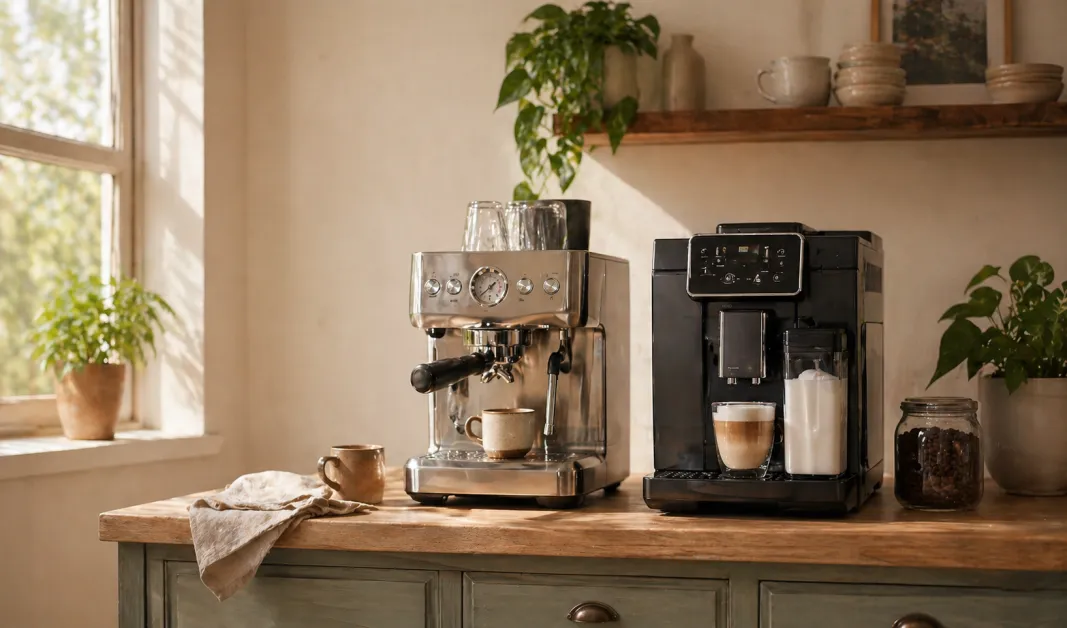
If you’re deciding between a semi-automatic and super-automatic espresso machine for home use, here’s the straightforward answer: super-automatic machines require significantly less skill because they handle grinding, tamping, extraction, and milk frothing automatically. Semi-automatic machines put you in control of most steps, which means a steeper learning curve but also the ability to dial in shots exactly how you want them. Your choice depends on whether you value convenience or hands-on craftsmanship.
The espresso machine sitting on your kitchen counter is about to become either your morning ritual or your source of frustration. The difference between semi-automatic and super-automatic machines isn’t just about buttons and levers – it’s about how much work you’re willing to do before that first sip hits your lips.
What Actually Separates These Two Machine Types
A semi-automatic espresso machine is the middle ground between manual lever machines and fully automated ones. You grind your beans, tamp the grounds into the portafilter, lock it in, and press a button to start the pump. You stop the shot by pressing the button again when it looks right. It’s hands-on, but not exhausting.
A super-automatic espresso machine (sometimes called a fully automatic machine) does nearly everything for you. You load beans into the hopper, select your drink from a touchscreen or dial, and the machine grinds, tamps, extracts, and sometimes even froths milk. You’re essentially pressing one button and waiting.
The skill gap between them is real, but it’s not insurmountable for either path. It’s more about what appeals to you as a home cook and coffee drinker.
Why Super-Automatic Machines Win on Ease
Let’s be honest – if your goal is a good espresso-based drink with minimal learning, super-automatic machines are the obvious choice. You don’t need to understand grind size, tamping pressure, or extraction time. The machine handles those variables for you.
This matters more than it sounds. Dialing in espresso – the process of adjusting grind size and tamping pressure to get the right flavor and flow – takes practice. It’s not hard, but it does require some trial and error. With a super-automatic, that’s all eliminated. You get consistency from day one, which is especially valuable if you’re not a morning person or you’re making drinks for multiple people with different preferences.
Super-automatics also typically include built-in milk frothers, so cappuccinos and lattes come out looking professional without you needing to learn milk steaming technique. That’s another skill you skip entirely.
The downside? Less flexibility. If you want to experiment with different beans, brewing temperatures, or extraction times, you’re limited by what the machine allows. And super-automatics tend to cost more upfront – usually $1,500 to $3,000+ for a decent home model.
What Semi-Automatic Machines Demand (And Offer)
Semi-automatics require actual involvement, but the learning curve is manageable for most people. You’ll need to learn a few core skills:
- Grinding – You need a burr grinder (not a blade grinder) that lets you adjust grind size. This is non-negotiable.
- Tamping – Pressing the grounds evenly into the portafilter with consistent pressure. It feels awkward at first, but becomes muscle memory quickly.
- Timing – Watching your shot pull and stopping when it looks right (usually 25-30 seconds for a single or double shot).
- Milk steaming – If you want milk-based drinks, you’ll learn to steam and froth milk by hand. This is the hardest skill, but it’s learnable in a few weeks of practice.
Here’s the thing though – these skills aren’t complicated. They’re just unfamiliar. Most people dial in their first decent shot within a week or two of regular use. Within a month, you’re making drinks that rival a decent cafe.
Semi-automatics cost less ($300 to $1,500 for quality home models) and give you way more control. Want to try a lighter roast? Adjust your grind. Want a longer extraction? Pull the shot longer. You can dial in exactly what you like, which is genuinely satisfying once you figure it out.
The Real Skill Question – What’s Your Actual Situation
Choosing between these machines isn’t just about raw skill level. It’s about your lifestyle and what you actually want from your espresso setup.
Go super-automatic if: You want espresso-based drinks with zero fuss, you’re making coffee for a household with different preferences, you value consistency over experimentation, or you’re genuinely not interested in learning coffee technique. You’re paying for convenience, and it’s worth it if that’s what you need.
Go semi-automatic if: You enjoy the ritual of making coffee, you want to tinker and improve over time, you’re willing to invest a few weeks learning, or you want better value for your money. You’re also choosing this if you plan to upgrade your coffee setup over time – semi-automatics are a better foundation for that journey.
One more thing – if you’re buying a semi-automatic, budget for a separate grinder. A $400 semi-automatic machine paired with a $100 blade grinder will disappoint you. A $400 machine with a $300 burr grinder will blow your mind. Super-automatics have grinders built in, so that’s one less thing to buy.
The Maintenance Reality
Super-automatics need more cleaning. They have more moving parts, more places for coffee oil to accumulate, and they require regular backflushing and deep cleaning to avoid clogging. It’s not difficult, but it’s an ongoing task.
Semi-automatics are simpler to maintain. You purge the group head, backflush if your machine allows it, and keep the portafilter clean. Less complexity means fewer things break.
Common Questions About Espresso Machine Skill Levels
Do I really need to buy a separate grinder for a semi-automatic machine?
Yes. Built-in grinders on budget espresso machines are notoriously inconsistent. You need a burr grinder that lets you dial in grind size precisely. It’s the single most important upgrade you can make for shot quality. Look for conical or flat burr grinders in the $200-$400 range.
How long does it actually take to get good at pulling espresso shots?
You can pull a drinkable shot within your first week. Getting consistently good shots takes about 2-4 weeks of regular practice. Getting truly dialed in – where you understand your machine and can adjust on the fly – takes a few months. That’s not a long learning curve for the skill you’re gaining.
Can you steam milk with a super-automatic machine?
Most super-automatics have built-in steam wands, but they’re automated. You stick the wand in your milk pitcher and it froths for you. It’s convenient, but the milk texture isn’t as silky as hand-steamed milk. If milk quality matters to you, this might be a limitation.
Are super-automatic machines worth the extra cost?
If you value speed and consistency over everything else, yes. If you’re willing to spend 5-10 minutes in the morning making coffee and you enjoy learning, a semi-automatic gives you better value. Think about what you actually want from your morning coffee routine.
What if I buy a semi-automatic and hate it?
You won’t. The learning curve is gentle enough that most people find it enjoyable rather than frustrating. The bigger risk is buying a cheap semi-automatic paired with a bad grinder – that combination will make you regret it. Invest properly upfront and you’ll be fine.
The Bottom Line
Super-automatic machines require almost no skill and deliver consistent results immediately. Semi-automatics ask you to learn a few techniques, but they cost less, offer more control, and honestly, the learning process is part of the appeal for most home coffee enthusiasts. Neither choice is wrong – it depends on whether you’re buying convenience or buying the ability to make exactly what you want. If you’re leaning toward semi-automatic but worried about the learning curve, don’t be. You’ve got this.