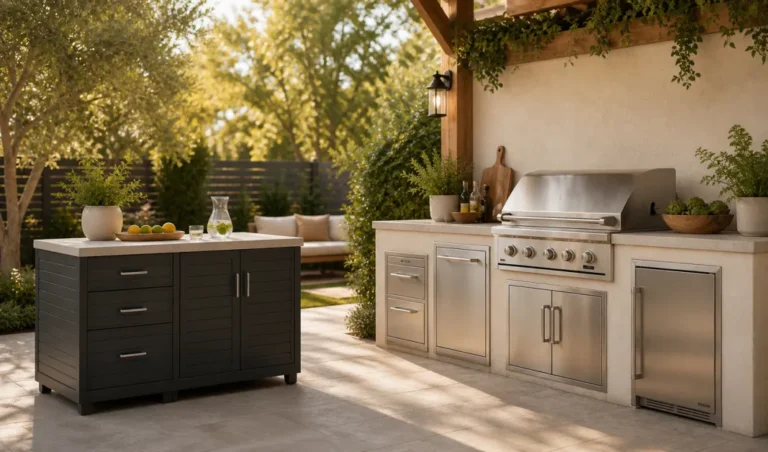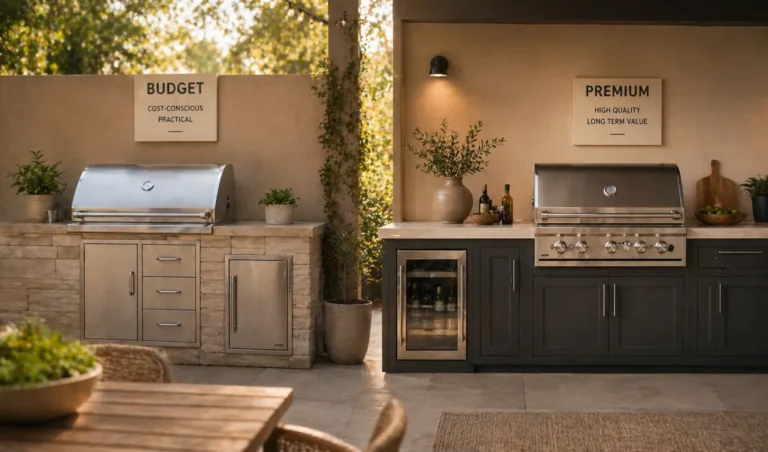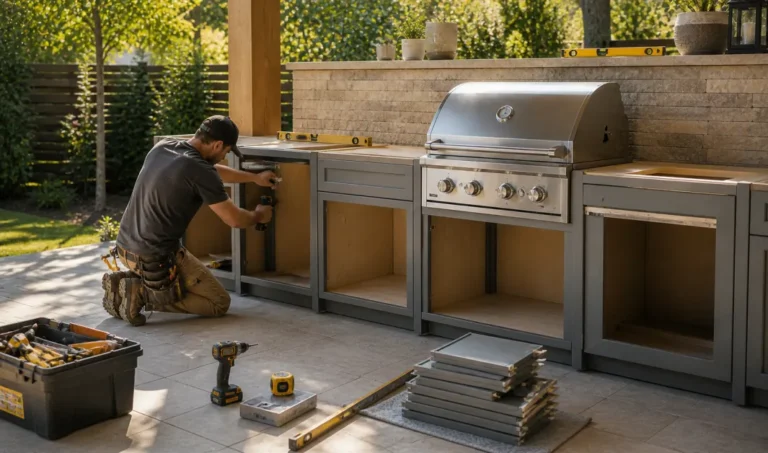
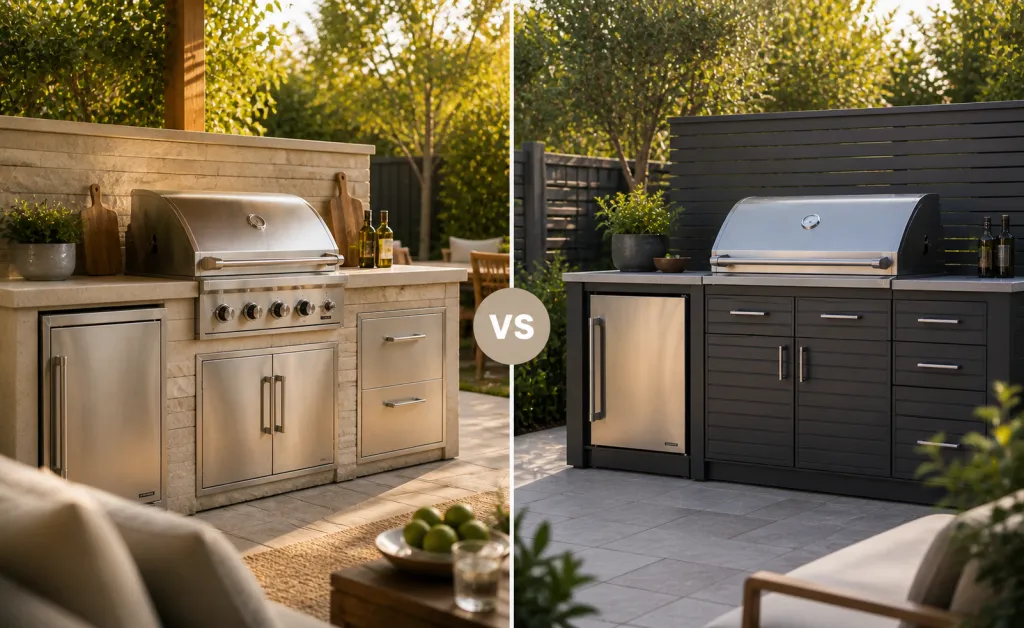
If you’re planning an outdoor kitchen, you’ve probably stared at cabinet options and wondered why there’s such a price gap between stainless steel and powder-coated aluminum. Both look sleek, both claim to handle weather, and both will drain your wallet—but in very different ways. The real answer isn’t about which one’s objectively “better.” It’s about which one fits your climate, your budget, and how much maintenance you’re actually willing to do.
Stainless steel outdoor kitchen cabinets offer superior corrosion resistance and durability, especially in harsh coastal or humid climates, but cost significantly more upfront. Powder-coated aluminum cabinets are lighter, more affordable, and still weather-resistant for most environments—though they require more regular maintenance and may show wear faster in extreme conditions.
Why Material Matters for Outdoor Cabinets
Your outdoor kitchen cabinet material does more than look good. It’s your defense against rain, salt spray, temperature swings, and UV rays. Unlike interior cabinetry, outdoor storage has to handle constant weather exposure without warping, rusting, or losing its finish. Get this wrong, and you’re refinishing or replacing cabinets in five years instead of fifteen.
The two materials you’ll encounter most are stainless steel and powder-coated aluminum. Both exist for good reasons—they’re just solving different problems at different price points.
Stainless Steel – The Premium Choice
What Makes Stainless Steel Stand Out
Stainless steel cabinets are built from an alloy that resists corrosion through a naturally occurring protective oxide layer. When that layer gets scratched, it reforms automatically. This self-healing property is why stainless steel has become the standard in commercial kitchens and high-end outdoor installations.
The grade matters here. Most outdoor cabinet manufacturers use either 304 or 316 stainless steel. Grade 304 is the baseline—solid for most residential applications. Grade 316 adds molybdenum to the alloy, making it significantly more corrosion-resistant in coastal or salt-heavy environments. If you’re within five miles of the ocean, 316 is worth the upgrade.
Real Advantages
Longevity is stainless steel’s biggest selling point. A quality stainless steel cabinet can last 20+ years with minimal degradation. You’re looking at a genuine investment that won’t need replacement.
Minimal maintenance is the second win. An occasional wipe-down with a microfiber cloth keeps it looking new. You don’t need special sealers or protective coatings. No rust, no peeling, no surprises.
Aesthetic consistency matters too. Stainless steel holds its appearance year after year. The finish doesn’t fade, and it doesn’t require repainting or refinishing.
The Honest Downsides
Cost is the obvious one. Stainless steel cabinets typically run 40-60% more than comparable aluminum options. For a full outdoor kitchen setup, you’re talking thousands of dollars in difference.
Fingerprints and water spots are real annoyances. Stainless steel shows every smudge and water mark. If you’re the type who notices these things, you’ll be wiping cabinets frequently. Some people don’t mind. Others find it maddening.
Installation requires more care. Stainless steel is heavier, which means your mounting hardware needs to be solid. Poor installation can lead to sagging doors or misaligned drawers over time.
Powder-Coated Aluminum – The Practical Alternative
How Powder Coating Works
Aluminum cabinets get their weather resistance from a powder coating—a dry, electrostatically applied finish that bonds to the metal at a molecular level. This creates a hard, protective shell that keeps moisture away from the underlying aluminum.
The coating itself is typically a polyester or polyurethane blend, often with UV inhibitors built in. Quality matters here. Premium powder coatings are thicker and more durable than budget versions.
Real Advantages
Price is the primary draw. Powder-coated aluminum cabinets cost significantly less than stainless steel while still delivering solid outdoor performance. For budget-conscious homeowners, this is a meaningful difference.
Lightweight construction makes installation easier. Aluminum is roughly one-third the weight of stainless steel, which means simpler mounting, fewer installation complications, and less structural strain on your outdoor kitchen frame.
Color variety is something stainless steel can’t match. Powder coating comes in virtually any color imaginable. If you want your cabinets to match your home’s exterior or coordinate with your outdoor space, aluminum gives you options.
Durability in moderate climates is solid. In typical suburban environments with normal rainfall and no salt exposure, powder-coated aluminum holds up well for 10-15 years.
Where Aluminum Falls Short
Coating degradation is the main issue. Even quality powder coating eventually chalks, fades, or peels, especially in harsh UV or salt environments. Once the coating is compromised, the aluminum underneath becomes vulnerable to oxidation.
Maintenance requirements are higher than stainless steel. You’ll need to clean regularly with appropriate cleaners, potentially recoat every 5-7 years in harsh climates, and watch for early signs of coating failure.
Coastal performance is weak. If you live near salt water, powder-coated aluminum struggles. Salt accelerates coating breakdown and exposes the aluminum to corrosion. Stainless steel is genuinely the better choice here.
Repair challenges matter too. If your powder-coated cabinet gets dented or scratched, touching it up isn’t simple. You can’t just apply new powder coating to a small area—you’d need professional recoating of the entire piece.
Head-to-Head Comparison
| Factor | Stainless Steel | Powder-Coated Aluminum |
|---|---|---|
| Initial Cost | High ($$$) | Moderate ($$) |
| Expected Lifespan | 20+ years | 10-15 years |
| Maintenance | Minimal | Regular cleaning, occasional recoating |
| Coastal/Salt Resistance | Excellent (especially 316) | Poor to fair |
| Weight | Heavy | Lightweight |
| Color Options | Limited (metallic finishes) | Unlimited |
| Fingerprint Visibility | High | Depends on color |
| Repairability | Good | Challenging |
How to Choose Based on Your Situation
Go With Stainless Steel If
You live in a coastal area, humid subtropical climate, or anywhere with significant salt exposure. The corrosion resistance gap is too wide to ignore in these environments.
You’re building a permanent, high-end outdoor kitchen that you plan to keep for 15+ years. The higher upfront cost amortizes over time.
You want minimal maintenance and don’t want to think about cabinet upkeep. Stainless steel lets you forget about it.
You’re in a dry climate like the Southwest. Stainless steel’s advantages are still real, even if the corrosion pressure is lower.
Powder-Coated Aluminum Makes Sense If
Budget is a primary concern and you live in a moderate climate without salt exposure. You get solid performance at a fraction of the cost.
You want color customization or a specific aesthetic that stainless steel can’t deliver. The design flexibility is real.
Your outdoor kitchen is semi-permanent or you’re renting. You don’t need 20-year longevity.
You’re comfortable with regular maintenance and periodic recoating. Some homeowners actually prefer this—it gives them a refresh opportunity every few years.
Installation and Maintenance Essentials
Stainless Steel Care
Clean with a microfiber cloth and mild soap and water. For stubborn spots, use a stainless steel-specific cleaner. Always wipe with the grain if your cabinets have a brushed finish. Avoid abrasive scrubbers that can scratch the surface.
Check door hinges and drawer slides annually. These are the wear points that matter most. Apply a light machine oil if they start to stick.
Aluminum Maintenance
Wash regularly with a pH-neutral cleaner to prevent coating buildup. Don’t use harsh chemicals or abrasive materials.
Inspect the coating every year for early signs of peeling or chalking. Catching problems early means smaller repair costs.
Plan for professional recoating every 5-7 years in harsh climates, or every 10 years in moderate ones. This extends the cabinet life significantly.
Common Questions About Outdoor Cabinet Materials
Can You Mix Stainless Steel and Aluminum in the Same Kitchen?
Yes, and many outdoor kitchens do. You might use stainless steel for high-wear areas like sink cabinets and aluminum for storage. Just be aware that they’ll age differently visually, so consider the overall aesthetic.
Is Grade 304 Stainless Steel Enough for My Backyard?
Grade 304 works fine in most inland residential settings. If you’re within 5-10 miles of salt water or in a heavy industrial area, upgrade to 316. The extra cost is worth it in those environments.
What’s the Real Cost Difference Over 15 Years?
Stainless steel costs more upfront but requires minimal maintenance. Aluminum costs less initially but needs periodic cleaning, potential recoating, and possible replacement sooner. Over 15 years, the total cost difference might be smaller than you’d expect—but stainless steel still typically wins on value if you keep the kitchen that long.
Can You Refinish Powder-Coated Cabinets?
Yes, but it’s a professional job. Proper refinishing requires stripping the old coating, preparing the surface, and applying new powder coating in a controlled environment. It’s expensive—sometimes nearly as much as replacing with new aluminum cabinets. Plan for this cost if you think you’ll want a refresh.
Does Stainless Steel Ever Rust?
True stainless steel doesn’t rust in normal conditions. However, low-grade stainless or contaminated surfaces can show surface discoloration. This isn’t rust—it’s a surface reaction that cleans off easily. Grade 304 and 316 stainless won’t develop actual rust in residential outdoor settings.
The Bottom Line
Stainless steel is the smarter long-term investment if you’re building a permanent outdoor kitchen and can handle the upfront cost. It’s genuinely low-maintenance and will outlast you. Powder-coated aluminum makes sense if budget matters more than longevity, or if you’re in a moderate climate where it’ll perform reliably for a decade or more.
Neither choice is wrong—they’re just solving different equations. Think about how long you’re staying in your home, what your climate actually throws at outdoor structures, and whether you’d rather spend more upfront or spread maintenance costs over time. That clarity makes the decision pretty straightforward.